How Dynamic QR Codes Are Changing the Way Businesses Share Information
By Rahul ·
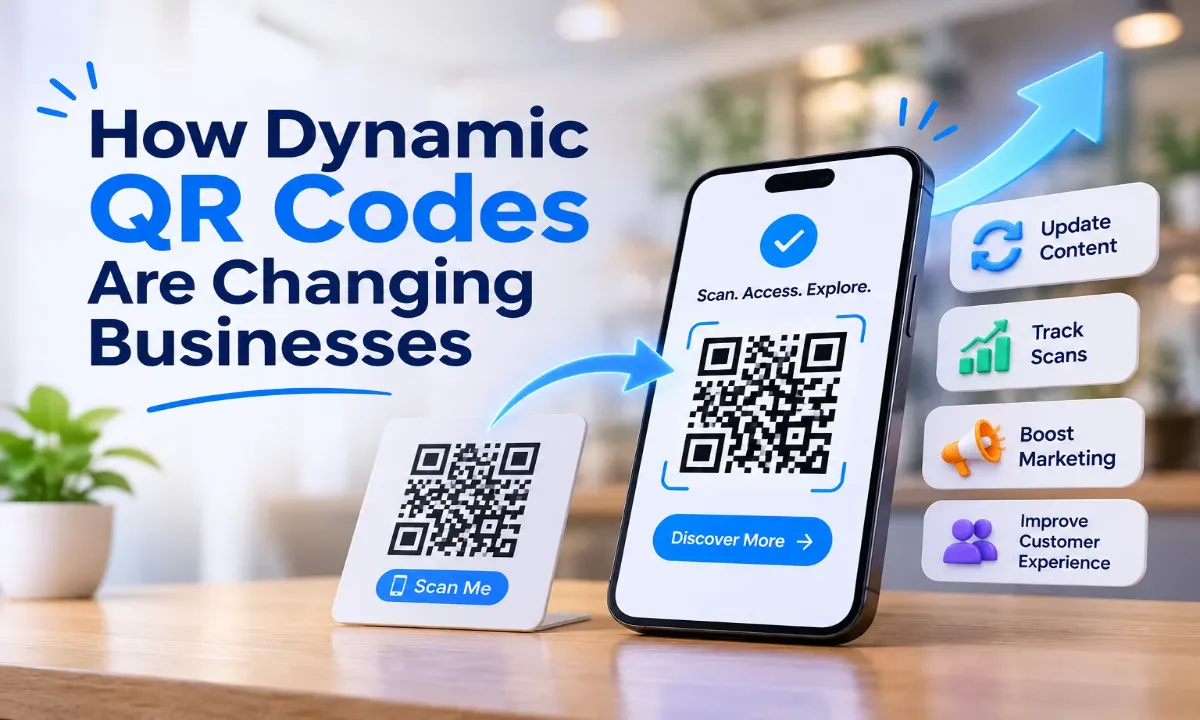
Businesses today need faster, simpler, and more convenient ways to share information with customers. Whether it is a restaurant displaying its menu, a retail store sharing product details, or a company promoting its services, customers expect information to be available instantly. This is where a dynamic QR code generator becomes useful. Unlike traditional QR codes, dynamic QR codes allow businesses to update the information behind a code without changing or reprinting the QR code itself. This small but powerful difference is changing how businesses communicate, market their products, and connect with customers.
As more people use smartphones for everyday activities, QR codes are becoming an important part of modern business communication. But dynamic QR codes offer much more than simply directing users to a website. They provide flexibility, tracking capabilities, and better control over shared information.
Let's explore how dynamic QR codes work, why businesses are adopting them, and how they are transforming everyday business operations.
What Are Dynamic QR Codes?
A dynamic QR code is a scannable code that redirects users to information through an editable destination link. The destination can be changed whenever required without creating a new QR code.
For example, imagine a restaurant prints a QR code on 500 menus. Initially, the code directs customers to the restaurant's food menu. Later, the restaurant introduces new dishes and changes its prices.
With a static QR code, the restaurant may need to generate and print new codes. However, with a dynamic QR code, the restaurant can simply update the linked menu. Customers scanning the existing code will automatically see the latest information.
This flexibility makes dynamic QR codes particularly useful for businesses that frequently update their content.
Dynamic QR Codes vs. Static QR Codes: What's the Difference?
Although both types of QR codes look similar, they work differently.
A static QR code stores the actual information directly within the code. Once generated, its encoded information cannot be edited. A dynamic QR code generally contains a redirect URL that connects users to information hosted elsewhere, allowing the destination to be updated.
Understanding static vs dynamic qr codes is important for businesses that want to choose the right QR code solution based on their needs.
Here are the key differences:
Feature | Static QR Code | Dynamic QR Code |
Information updates | Cannot be edited | Can be updated |
Destination changes | Requires a new QR code | Existing code can be reused |
Scan tracking | Not built into the code itself | Often available through the platform |
Marketing flexibility | Limited | High |
Campaign management | Less flexible | Easier to manage |
Long-term usability | Depends on original information | Suitable for changing information |
Which One Should Businesses Choose?
Static QR codes are suitable for permanent information, such as a Wi-Fi password or fixed contact details. Dynamic QR codes are better for marketing campaigns, product information, business promotions, digital menus, and situations where content may change regularly.
7 Ways Dynamic QR Codes Are Changing Business Communication
1. Businesses Can Update Information Without Reprinting Materials
One of the biggest advantages of dynamic QR codes is the ability to update information whenever needed.
Businesses regularly change their prices, product details, service offerings, promotional campaigns, and contact information. Updating printed materials every time can increase operational costs.
Dynamic QR codes solve this problem by allowing businesses to modify the destination without replacing the printed code.
Practical example:
A clothing store runs a seasonal discount campaign. Instead of printing new promotional flyers for every offer, the business can use the same QR code and update the landing page whenever a new discount becomes available.
This saves time, reduces printing expenses, and makes promotional campaigns easier to manage.
2. They Make Customer Experiences More Convenient
Customers don't always want to search through websites, download documents, or ask employees for basic information.
A quick QR code scan can take them directly to the information they need.
Businesses can use dynamic QR codes to share:
Digital product catalogues.
Restaurant menus.
Service descriptions.
Product instruction manuals.
Appointment booking pages.
Customer support information.
Frequently asked questions.
For example, an electronic products store can place a dynamic QR code on product packaging. Customers can scan it to access setup instructions, warranty information, or troubleshooting guides.
This creates a smoother customer experience while reducing the need for printed documentation.
3. They Help Businesses Make Marketing Campaigns More Flexible
Traditional marketing materials are often difficult to modify once distributed. A printed brochure, newspaper advertisement, or promotional banner cannot easily be updated.
Dynamic QR codes introduce flexibility into these marketing activities.
Businesses can connect QR codes to different landing pages depending on their current campaign. They can promote a new product today, highlight a special offer next month, and direct customers to a registration page later.
The printed QR code remains the same.
For digital marketers, this creates additional opportunities to connect offline marketing with online customer journeys.
Example: A company distributes promotional cards at a trade exhibition. Instead of printing lengthy product information, it includes a QR code that takes visitors to a dedicated landing page with product details, enquiry forms, and contact information.
4. Businesses Can Track Scans and Understand Customer Behaviour
Another important feature of many dynamic QR code platforms is scan analytics.
Depending on the platform and tracking configuration, businesses can access information such as:
Total number of scans.
Date and time of scans.
Approximate geographical location.
Device type.
Operating system.
Campaign performance.
This information can help businesses understand how customers interact with their offline marketing materials.
For instance, a business distributes QR-enabled promotional posters across three different locations. By using separate QR codes for each location, it can compare which campaign generates more scans.
However, businesses should remember that scan analytics do not automatically reveal the identity of individual customers. Location and device information may also be approximate or limited by privacy settings.
5. They Connect Offline Marketing with Online Platforms
Customers often discover businesses through physical advertisements, packaging, visiting cards, banners, and brochures.
The challenge is moving those customers from offline interactions to digital platforms.
Dynamic QR codes help bridge this gap.
Businesses can place QR codes on:
Business cards to share digital contact details.
Product packaging to display product information.
Store banners to promote online offers.
Event tickets to share schedules.
Brochures to generate enquiries.
Restaurant tables to display digital menus.
Consider a real-world scenario involving a small digital marketing agency. It distributes business cards during a networking event. Instead of printing all its services on the card, it includes a QR code directing visitors to its website.
Visitors can explore services, view previous projects, and submit enquiries without manually entering a website address.
This turns a simple business card into an interactive marketing tool.
6. They Support Better Product Information and Transparency
Modern customers often research products before making purchasing decisions. They want to understand what they are buying, how products work, and whether they meet their requirements.
Dynamic QR codes allow businesses to make additional product information accessible without overcrowding product packaging.
For example, a food brand could use a QR code to provide access to:
Detailed product information.
Usage instructions.
Ingredient information.
Storage recommendations.
Certifications and supporting documents, where applicable.
Similarly, furniture manufacturers can provide assembly instructions, maintenance guides, and product care information.
This approach makes it easier for customers to access relevant information whenever they need it.
Businesses should ensure that the information linked through QR codes is accurate, updated, and compliant with applicable product labelling requirements.
7. They Reduce Operational Costs and Improve Efficiency
Printing new materials, distributing updated documents, and managing outdated information can consume business resources.
Dynamic QR codes help reduce these repetitive activities.
Once a QR code is printed and distributed, businesses can continue using it while updating the linked content whenever necessary.
This can be particularly useful for:
Restaurants managing frequently changing menus.
Retailers updating promotional offers.
Educational institutions sharing course information.
Real estate companies updating property listings.
Event organisers sharing schedules and announcements.
The overall benefit is better information management with fewer manual updates.
How Different Industries Are Using Dynamic QR Codes
Dynamic QR codes are not limited to one particular industry. Their flexibility makes them useful across different business sectors.
Retail and E-commerce
Retail businesses can use QR codes to share product catalogues, promotional offers, product demonstrations, and customer feedback forms.
A customer browsing a physical store can scan a product code and explore additional specifications or available options online.
Restaurants and Hospitality
Restaurants can provide digital menus, special offers, reservation links, and feedback forms.
If menu items or prices change, management can update the digital menu without replacing the QR code displayed on tables.
Healthcare
Healthcare organisations can use QR codes to provide access to appointment booking pages, patient information resources, and general health instructions.
Sensitive medical information should never be exposed through an unsecured public QR destination. Appropriate privacy and access controls are essential.
Education
Schools, colleges, and training institutes can share course details, digital learning resources, event schedules, and admission information.
For example, an educational institute can place a QR code on an admission brochure that directs prospective students to its latest course catalogue.
Real Estate
Real estate agencies can place QR codes on property boards, brochures, and advertisements.
Interested buyers can scan the code to view property images, floor plans, pricing information, and enquiry forms.
This makes it easier for potential customers to explore property details without waiting for an agent to provide additional documents.
Why Dynamic QR Code Generators Are Becoming Important for Businesses
Creating a QR code is relatively simple. However, managing multiple QR codes, updating destinations, and understanding campaign performance requires a more organised solution.
This is where a dynamic QR code generator becomes valuable.
A good QR code generator can help businesses:
Create editable QR codes for different purposes.
Manage multiple campaigns from one platform.
Update destination URLs without changing printed codes.
Monitor available scan analytics.
Organise QR codes based on campaigns or business requirements.
Create QR codes for websites, documents, menus, contact details, and other supported destinations.
Businesses should evaluate features carefully before selecting a platform. Check whether it supports long-term code availability, scan limits, analytics, security, and transparent pricing.
It is also important to understand that dynamic QR codes generally depend on the service provider maintaining the redirect infrastructure. If a subscription expires or the provider discontinues the service, the QR code may stop working.
What Is the Future of Dynamic QR Codes?
Dynamic QR codes are becoming part of a broader shift towards connected customer experiences.
As businesses continue adopting digital solutions, QR codes are likely to work alongside other technologies, including artificial intelligence, marketing automation, customer relationship management systems, and personalised landing pages.
Some emerging possibilities include:
Personalised customer journeys: Directing customers to relevant offers and information based on campaign context.
Marketing automation: Connecting QR code interactions with supported marketing workflows.
Better campaign measurement: Combining QR scan data with other marketing analytics to understand campaign performance.
Digital product information: Making product guides, instructions, and supporting information easier to access.
Smart business operations: Using QR codes to simplify registrations, event management, feedback collection, and information sharing.
However, these capabilities depend on the platform, integrations, customer consent, and applicable privacy requirements. A QR code itself does not automatically provide AI personalisation or automation.
The real opportunity lies in combining QR technology with useful digital experiences.
Conclusion
Dynamic QR codes are changing how businesses share information by making communication faster, more flexible, and easier to manage.
From updating restaurant menus and sharing product information to connecting offline marketing campaigns with digital platforms, they provide practical solutions for everyday business challenges.
Their biggest advantage is simple: businesses no longer need to change the printed QR code every time the linked information changes.
For businesses looking to improve customer experiences, simplify marketing activities, and make information more accessible, dynamic QR codes are worth considering.
As digital communication continues to evolve, businesses that adopt convenient and customer-friendly technologies will be better positioned to meet changing customer expectations.
Frequently asked questions
Can I change the URL of a dynamic QR code after printing it?
Yes. Most dynamic QR code platforms allow users to change the destination URL from their dashboard. The printed QR code remains unchanged, provided the service continues supporting the redirect.
Can businesses track how many people scan a dynamic QR code?
Yes. Many dynamic QR code platforms provide scan analytics, including scan counts, dates, approximate locations, and device information. Available metrics depend on the platform and its tracking configuration.
Can I use dynamic QR codes for marketing campaigns?
Absolutely. Businesses can use them on posters, brochures, packaging, business cards, advertisements, and promotional materials to direct customers to landing pages, special offers, product information, and enquiry forms.
Can I use one dynamic QR code for multiple marketing campaigns?
Yes, you can reuse the same dynamic QR code by updating its destination. However, if you want to compare the performance of different campaigns accurately, using separate QR codes for individual campaigns is generally a better approach.
How can small businesses benefit from dynamic QR codes?
Small businesses can use dynamic QR codes to share digital menus, display product catalogues, collect customer feedback, promote offers, share contact details, and direct customers to their websites without repeatedly printing updated materials.